Building AI-Powered
Weather Intelligence
for Resilience
Every year, unpredictable weather devastates Pakistan - $30 billion lost in a single monsoon. For 250 million people, accurate forecasts aren't a luxury. Without them, lives are lost and economies crumble.

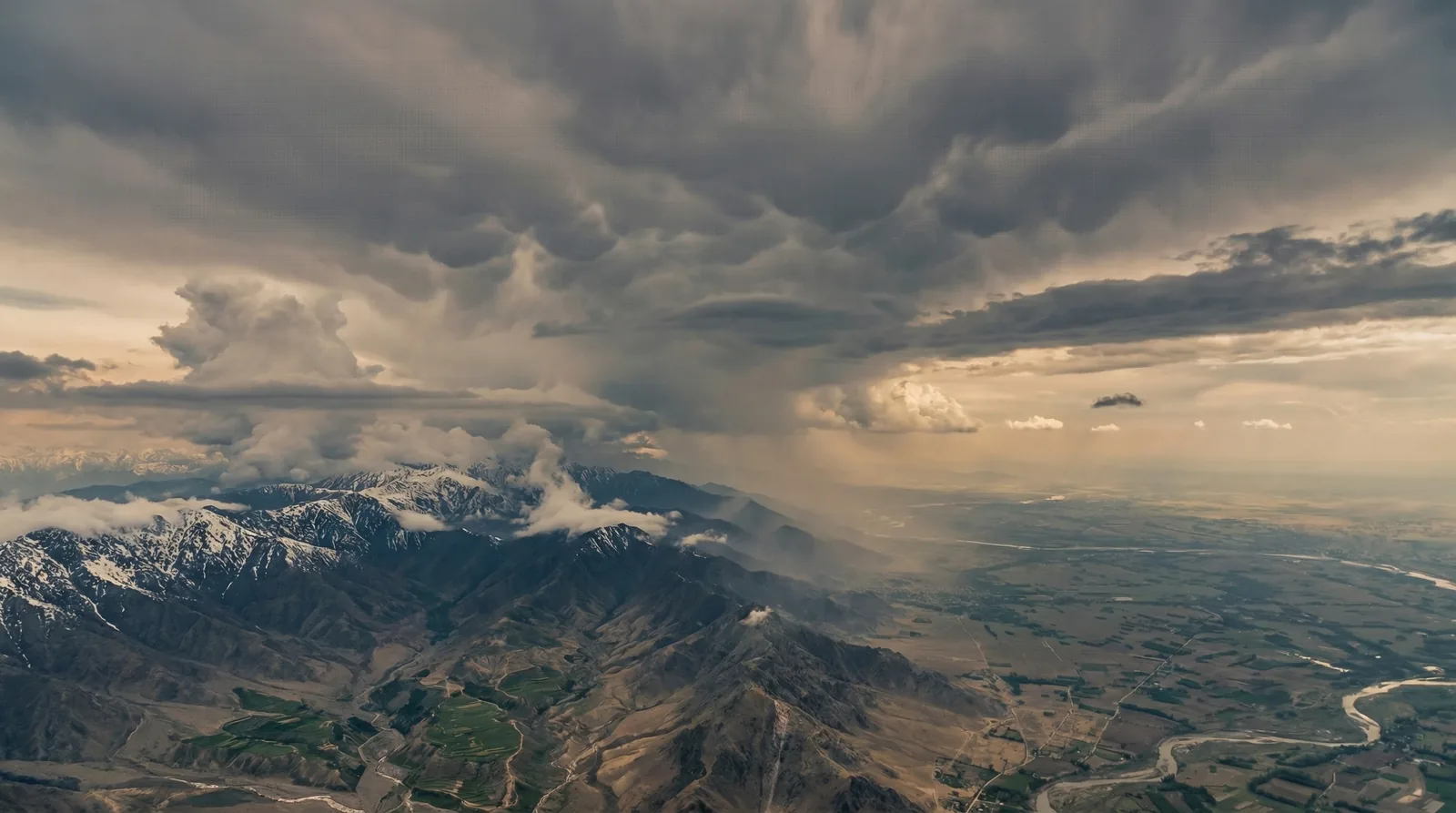


Sparse Weather Data
Pakistan has just 1 weather station per 9,000 km². The gap is filled with satellite estimates — secondary data with high error margins and limited ground-truth validation.
No Local Models
Forecasts rely on global NWP models with coarse continental grids — no models tailored for Pakistan's monsoon corridors, mountain valleys, or coastal microclimates.
Low resolution. One-size-fits-all grid covering entire continents.
Tailored for local terrain, monsoon patterns & microclimates.Virtually does not exist for Pakistan.
Inaccurate Forecasts
High-error data in, low-accuracy forecasts out — a circular dependency. The same global models produce significantly more accurate forecasts for data-dense regions like Europe and the US — not because the models are broken, but because they're starved of local data.
Communities Exposed
Forecasts people can't trust — industries that can't plan — disaster response that arrives too late. 85% of disaster losses come from rain and floods.
— World Bank Group
From data-blind to data-driven
Weather Station Network
A growing network of locally developed, low-cost, low-maintenance weather stations with a state-of-the-art sensor suite - helping close the data gap.
AI-Driven Forecasting Models
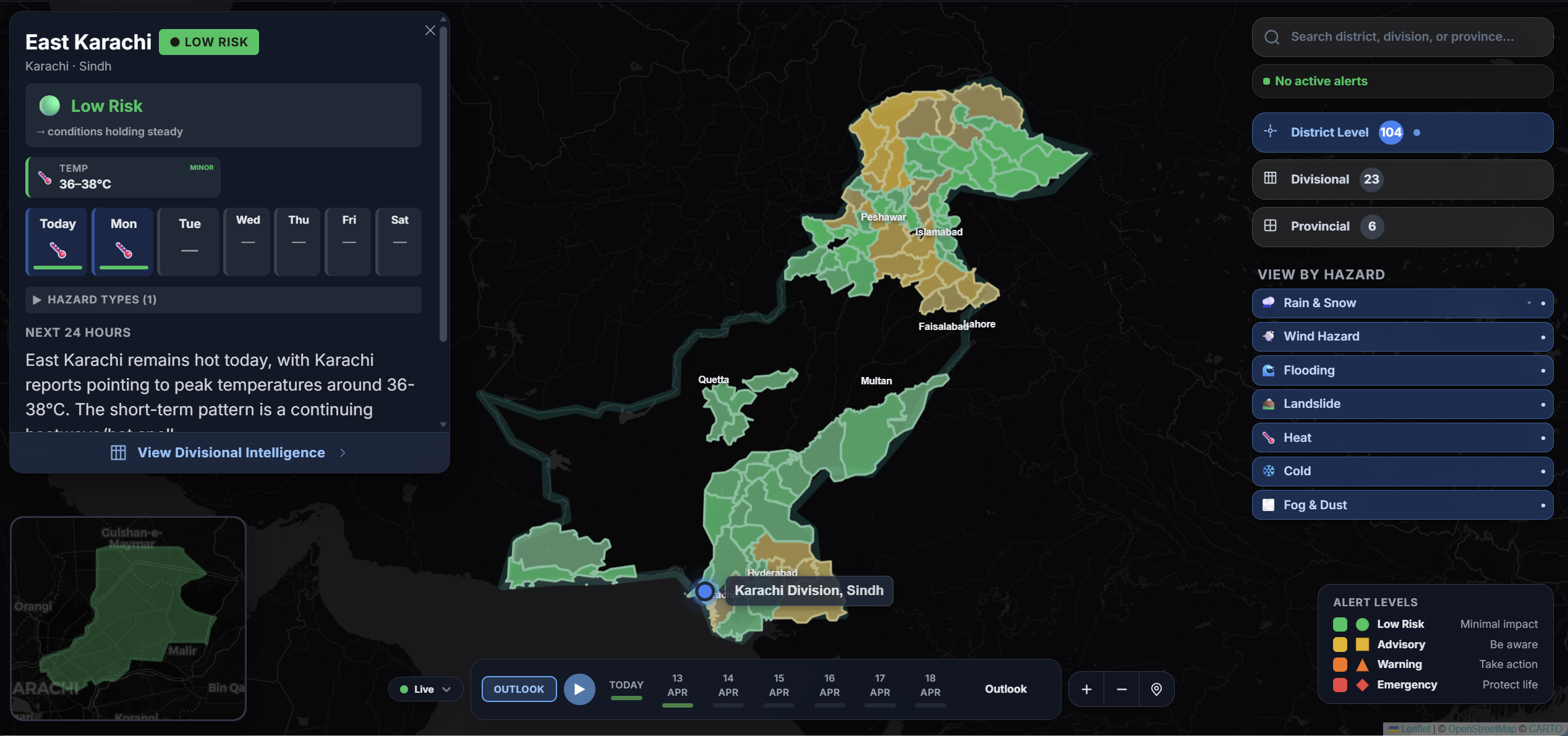
Hyper-local short-range and medium-range forecasts using AI-driven models at sub-2km spatial resolution.
Sector-Specific Intelligence
Crop advisories for farmers, generation forecasts for energy, route optimization for logistics, and impact-based warnings for governments.
Check it Out!
Weather intelligence for the sectors that need it most
From smallholder farmers making daily decisions about their crops to grid operators balancing renewable energy - accurate, local weather data changes outcomes.
Farms & Agri-businesses
Agriculture is the backbone of Pakistan's economy. Most farmers already rely on weather information for daily decisions - but current forecasts aren't local or accurate enough to act on.
What this looks like
- Weather-tuned fertilizer application timing
- Irrigation scheduling based on evapotranspiration data
- Pest and disease risk forecasting
- Post-harvest loss reduction
Energy
Pakistan's renewable energy ambitions depend on weather forecasts that don't yet exist at the local level. Better data means fewer disruptions and smarter grid management.
What this looks like
- Renewable grid integration through weather nowcasting
- Reduced energy curtailment via accurate forecasts
- Solar and wind output prediction
- Peak demand forecasting tied to weather events
Logistics
Pakistan's logistics networks are vulnerable to weather disruptions. Local forecasts enable proactive route planning and supply chain resilience.
What this looks like
- Route optimization during extreme weather
- Fleet and supply chain weather risk planning
- Warehouse and cold-chain weather monitoring
- Delivery scheduling around storm windows
Disaster Management
Current warnings name entire provinces - leaving communities with no way to prepare at a local level. Hyper-local forecasting saves lives by closing the gap between warning and action.
What this looks like
- District-level early warnings, not province-wide
- Flood forecasting for at-risk river basins
- Integration with national early-warning systems
- Community-level preparedness alerts via SMS